The Complete Guide to Choosing a Reliable Plumber: Your Essential Checklist + Red Flags to Avoid
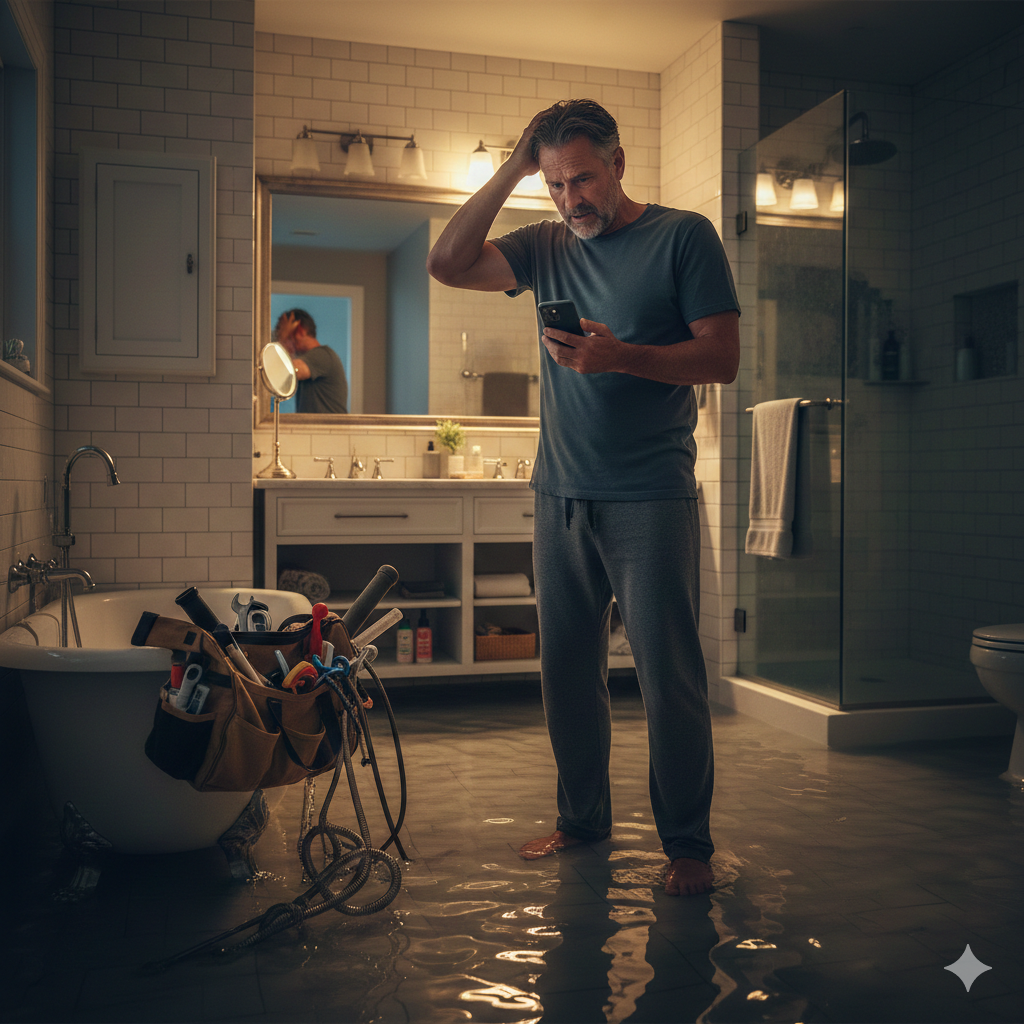
Last month, I stood ankle-deep in water at 2 AM, frantically searching for an emergency plumber. In that moment of panic, I nearly hired the first person who answered the phone—someone who turned out to have a trail of complaints with the Better Business Bureau.
That close call taught me an invaluable lesson: knowing how to choose a reliable plumber before an emergency strikes can save you thousands of dollars and countless headaches.
With over 132,000 plumbing businesses operating in the United States and the industry valued at approximately $158.6 billion, finding the right professional shouldn’t feel like searching for a needle in a haystack. Yet many homeowners struggle to distinguish between trustworthy plumbers and those looking to take advantage. This comprehensive guide will walk you through everything you need to know to make an informed decision, avoid common scams, and find a plumber you can trust for years to come.
Why Choosing the Right Plumber Matters More Than Ever
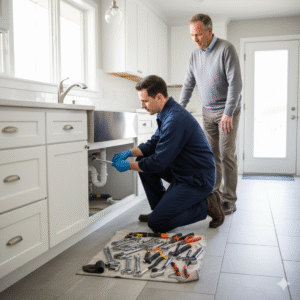
The plumbing industry is experiencing significant changes in 2025. While demand for skilled plumbers continues to grow, the U.S. is expected to be short 550,000 plumbers by 2027. This shortage has created an environment where both excellent professionals and opportunistic scammers compete for your business.
The average cost for hiring a plumber ranges from $180 to $489, with a national average of approximately $331 per job. However, I’ve seen homeowners pay significantly more—sometimes thousands extra—simply because they didn’t know what questions to ask or what warning signs to watch for.
The Ultimate Plumber Selection Checklist
1. Verify Licensing and Credentials
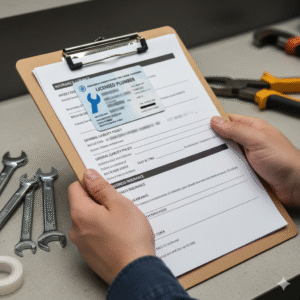
This is non-negotiable. Every legitimate plumber should possess proper state licensing. Most states require plumbers to hold at least a journeyman license, which typically requires 4-8 years of training and supervised experience, plus passing a comprehensive exam.
Here’s what to check:
- Request the license number upfront. A professional plumber will provide this without hesitation.
- Verify the license through your state’s licensing board. Most states offer online databases where you can confirm a plumber’s credentials are current and in good standing.
- Understand the license levels: Apprentice plumbers work under supervision, journeyman plumbers can work independently, and master plumbers can supervise others and pull permits.
In my experience calling five different plumbers last year, only three immediately provided their license numbers without prompting. The two who hesitated? Both had expired licenses or were operating without proper credentials.
2. Confirm Insurance and Bonding
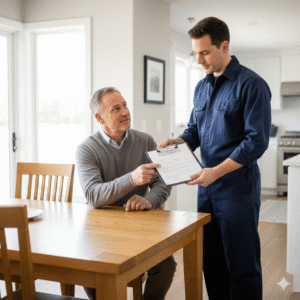
Insurance protects you from liability if something goes wrong. A reliable plumber should carry:
- General liability insurance (minimum $100,000 bodily injury and $25,000 property damage in most states)
- Workers’ compensation insurance if they employ others
- Bonding for larger jobs, which provides financial protection if the plumber fails to complete the work
Ask for certificates of insurance and verify they’re current. I once worked with a plumber who claimed to be insured but couldn’t produce documentation—a major red flag I should have heeded earlier.
3. Check Reviews and References
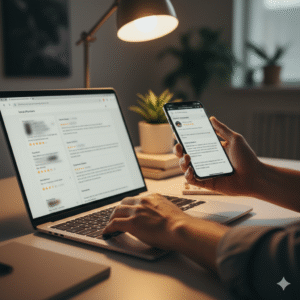
With nearly 30% of online reviews being fake, you need to be strategic about your research:
- Look across multiple platforms: Google, Yelp, Better Business Bureau, and Angi
- Watch for “date flooding”: Seven five-star reviews posted on the same day often indicate purchased reviews
- Read the negative reviews carefully: How a company responds to complaints tells you more about their character than glowing testimonials
- Ask for recent references: Speak with at least three previous customers who had similar work done
Pay attention to specifics. Reviews that say “Great service!” without mentioning what problem was solved, which plumber worked on the project, or when the service occurred are likely fake.
4. Evaluate Their Business Professionalism
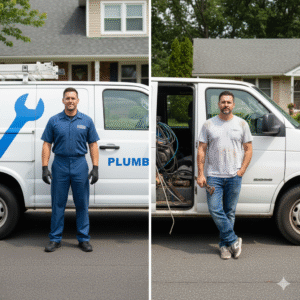
Legitimate plumbing companies demonstrate professionalism in multiple ways:
- Marked service vehicles with company name and contact information
- Physical business address (not just a PO Box or UPS Store)
- Professional website with detailed service information
- Uniformed technicians with company identification
- Prompt, professional communication
When I’ve worked with top-tier plumbers, they arrived in branded trucks, wore uniforms with their names, and presented business cards immediately. The unprofessional ones? They showed up in unmarked vans and seemed evasive about basic business details.
5. Get Written Estimates—Always

Never allow work to begin based on a verbal quote. A written estimate should include:
- Detailed scope of work
- Itemized costs for labor and materials
- Timeline for completion
- Payment schedule
- Warranty information
- License number and company contact details
I’ve learned to request estimates from at least three plumbers for any job over $500. This comparison shopping once saved me $800 on a water heater installation when I discovered one quote was significantly inflated.
Red Flags: When to Walk Away Immediately
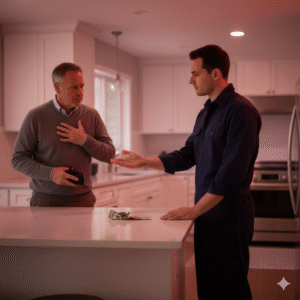
1. Demands for Full Payment Upfront
This is the most common plumbing scam. In most states, contractors cannot legally require more than 10% upfront payment. Legitimate plumbers typically request payment only after work is completed to your satisfaction.
If a plumber claims they need the full amount upfront to “purchase materials” or because they’ve “been burned before,” that’s your cue to end the conversation. I nearly fell for this once—thankfully, a neighbor warned me just in time that the same plumber had disappeared with her deposit.
2. Cash-Only Operations
Requiring cash-only payments with no written receipts often indicates:
- The plumber isn’t paying taxes
- They lack proper business licensing
- They don’t carry insurance
- You’ll have no recourse if problems arise
Reputable plumbers accept multiple payment methods and always provide detailed receipts.
3. Pressure Tactics and Scare Mongering
Dishonest plumbers use urgency to cloud your judgment. Watch for phrases like:
- “This is a critical safety issue that needs immediate attention”
- “Your entire system will fail if we don’t replace it today”
- “I can give you this price only if you decide right now”
A trustworthy plumber will explain the problem clearly, provide options, and give you time to make an informed decision. When a plumber recently told me my water heater was “about to explode,” I got a second opinion—turns out it just needed a $50 part replacement.
4. No Written Contract
Any plumber who refuses to provide a written contract is setting you up for disputes. The contract protects both parties and should be signed before any work begins.
5. Inability to Explain the Work
A qualified plumber should be able to explain:
- What the problem is in understandable terms
- Why their recommended solution is necessary
- What alternatives exist
- How the repair or installation will be performed
If they use confusing jargon and can’t answer your questions clearly, they’re either unqualified or trying to confuse you intentionally.
6. Lowball Estimates Followed by Price Inflation
The “bait-and-switch” scam starts with an incredibly low quote to win your business. Once they begin work, they “discover” additional problems that dramatically increase the cost.
Protect yourself by:
- Understanding typical pricing for common jobs
- Getting the scope of work clearly defined in writing
- Requesting approval for any additional work before it begins
7. Unmarked Vehicles and No Business Identity
Professional plumbers invest in their brand identity. If someone shows up in an unmarked van, can’t produce a business card, or provides only a cell phone number with no business address, proceed with extreme caution.
8. Unnecessary Replacement Recommendations
Some unscrupulous plumbers push for expensive replacements when repairs would suffice. The water heater replacement scam is particularly common—plumbers might insist on replacing the entire unit when the issue could be resolved by fixing or replacing a specific part like the heating element or thermostat.
Always ask: “Can this be repaired instead?” and consider getting a second opinion for any recommendation involving replacement of major systems.
How to Find a Trustworthy Plumber (Before You Need One)

The best time to find a reliable plumber is before you’re in an emergency. Here’s my proven strategy:
1. Ask Your Network
Start with personal recommendations from:
- Neighbors who have similar homes
- Local real estate agents
- Property managers
- Hardware store employees
The plumber I use now came recommended by three different neighbors—he’s been worth his weight in gold.
2. Research Local Established Companies
Companies that have been in business for 5+ years in your community have:
- A reputation to protect
- Established customer relationships
- Proven track record of quality work
Look for plumbers who are active in local business organizations or have won community awards.
3. Interview Potential Plumbers
Before you need emergency service, call 2-3 highly-rated plumbers and ask:
- What’s your typical response time for emergencies?
- Do you charge emergency rates? What are they?
- What areas do you specialize in?
- Do you offer warranties on your work?
- Can you provide references?
This conversation will give you a feel for their professionalism and help you make informed decisions when time is critical.
4. Save Their Contact Information
Once you’ve vetted a reliable plumber, save their contact information in multiple places:
- Your phone contacts
- On your refrigerator
- In your home maintenance binder
- Share with family members
Understanding Plumber Pricing in 2025

Plumbing fixture costs have risen by around 30% since 2020, and labor costs have increased as well. Understanding fair pricing helps you identify both overcharging and suspiciously low estimates.
Typical costs for common services:
- Drain cleaning: $150-$400
- Leaky faucet repair: $150-$350
- Toilet installation: $300-$600
- Water heater installation: $800-$3,500
- Pipe repair: $200-$1,000
- Emergency service fees: Often 1.5-3x standard rates
Remember that expertise and reliability are worth paying for. The cheapest option often becomes the most expensive in the long run.
What Professional Plumbers Do Differently

In my years of homeownership, I’ve worked with both mediocre and exceptional plumbers. Here’s what sets the reliable ones apart:
Before arriving:
- They confirm appointment times
- They provide estimated arrival windows
- They call if running late
During the visit:
- They wear shoe covers or booties
- They assess the situation before quoting
- They explain the problem and multiple solutions
- They clean up thoroughly after completing work
- They test their work before leaving
After the service:
- They provide detailed invoices
- They offer warranties (typically 1-2 years)
- They follow up to ensure satisfaction
- They’re available for questions
The Technology-Forward Plumber Advantage
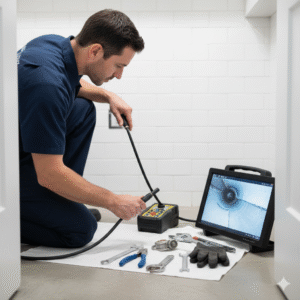
The plumbing industry is evolving rapidly. Smart bathroom products are experiencing significant growth, and modern plumbers need to understand both traditional plumbing and new technology.
When choosing a plumber in 2025, ask about their experience with:
- Smart water heaters and fixtures
- Water-saving technology
- Video pipe inspection
- Leak detection systems
A plumber who invests in modern equipment and continuing education is more likely to provide efficient, effective solutions.
Special Considerations for Emergency Situations
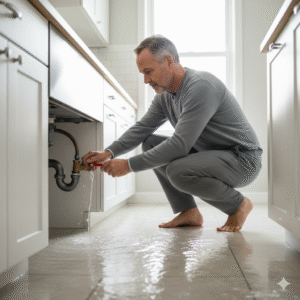
Plumbing emergencies don’t wait for business hours. Between 70 and 80 percent of plumbing services are considered urgent, making them a priority even when times are tight.
During a plumbing emergency:
- Shut off the main water valve if there’s active flooding
- Call your pre-vetted plumber first if you have one
- If you must find someone new, spend 10 minutes on verification:
- Check their license online
- Look for their business on Google Maps
- Read at least 5 recent reviews
- Get a phone estimate before they arrive
- Ask about emergency fees upfront
- Request to see their license and insurance upon arrival
Even in an emergency, taking these basic steps can save you from scammers who prey on desperate homeowners.
Building a Long-Term Relationship with Your Plumber

Once you find a reliable plumber, nurture that relationship:
- Schedule preventive maintenance annually
- Call them for small jobs, not just emergencies
- Pay promptly and leave honest reviews
- Refer them to friends and neighbors
My plumber now knows my home’s quirks, responds quickly to my calls, and often gives me priority scheduling because we’ve built mutual trust over five years.
The Investment in Peace of Mind
Choosing a reliable plumber isn’t just about getting the best price—it’s about protecting your home’s value, ensuring quality work, and gaining peace of mind. The hour I spend now vetting a plumber saves me from the stress, expense, and potential damage of hiring the wrong person.
The plumbing industry will remain essential and in-demand. As homeowners, our job is to make informed choices that protect our investments and ensure our families’ safety and comfort. By following this checklist, watching for red flags, and taking time to build relationships with qualified professionals, you’ll always know who to call when plumbing issues arise.
Frequently Asked Questions
How do I verify a plumber’s license?
Most states maintain online databases where you can search by license number or business name. Visit your state’s licensing board website (often under the Department of Labor or Consumer Affairs) and search for the plumber’s information. The license should be current, in good standing, and match the name of the person or company you’re hiring.
What should I do if I think I’ve been scammed by a plumber?
First, document everything with photos, receipts, and written communication. File a complaint with your state’s licensing board, the Better Business Bureau, and local consumer protection agency. If significant money is involved, consult with an attorney. Leave detailed reviews online to warn other homeowners. In cases of fraud, you may also file a police report.
Are online plumber review platforms reliable?
Review platforms can be helpful, but approach them critically. Look across multiple platforms (Google, Yelp, BBB, Angi) rather than trusting one source. Watch for red flags like date flooding, extremely vague reviews, or profiles with no other review history. The most reliable insights come from detailed reviews that describe specific problems, solutions, and plumber names.
When should I get a second opinion on plumbing work?
Always get a second opinion if a plumber recommends expensive replacements (especially of major systems like water heaters or sewer lines), claims extensive repairs are urgently needed without clear explanation, or if their estimate is significantly higher than you expected. For any project over $1,000, getting 2-3 estimates is wise.
How can I tell if a plumber’s estimate is fair?
Research average costs for your specific job online and in your local market. Get at least three written estimates from licensed plumbers. The estimates should be relatively similar—if one is drastically lower or higher, investigate why. Ask for itemized breakdowns of labor and materials. Remember that the lowest estimate isn’t always the best value if it involves cutting corners.
What’s the difference between a licensed journeyman and master plumber?
A journeyman plumber has completed an apprenticeship (typically 4-8 years) and passed a licensing exam, allowing them to work independently on most plumbing projects. A master plumber has additional years of experience (usually 2-4 more years beyond journeyman), has passed a more comprehensive exam, and can supervise other plumbers, pull permits, and often run their own plumbing business.
Should I hire a specialized plumber or a general plumber?
For standard residential plumbing issues (leaks, clogs, fixture installation), a licensed general plumber is appropriate. However, for specialized work like gas line installation, water treatment systems, or commercial plumbing, seek a plumber with specific credentials and experience in that area. Some plumbers hold special endorsements for medical gas piping, backflow prevention, or other specialties.
What warranty should a plumber provide?
Reputable plumbers typically offer warranties of 1-2 years on their labor. Manufacturer warranties on parts (like water heaters or fixtures) should be passed through to you. Get all warranty information in writing. If a plumber doesn’t offer any warranty on their work, that’s a red flag—they may not stand behind their quality.
Recommended Visual Content
- Infographic: “Plumber Credentials Checklist” – Visual breakdown of what to verify (license, insurance, bonding) with sample certificate images
- Comparison Chart: “Red Flags vs. Green Lights” – Side-by-side visual showing warning signs versus positive indicators
- Process Flowchart: “How to Find a Reliable Plumber in 5 Steps” – Simple visual guide from research to hiring
- Data Visualization: Graph showing average plumbing costs by service type and regional variations
- Screenshot Examples: How to verify a plumber’s license on your state’s website (step-by-step visual guide)
Key Takeaways
- Verify credentials BEFORE hiring: Check licensing, insurance, and reviews across multiple platforms
- Never pay full amount upfront: Most states prohibit contractors from requiring more than 10% deposit
- Get everything in writing: Estimates, contracts, and warranties should all be documented
- Watch for pressure tactics: Legitimate plumbers give you time to make informed decisions
- Build relationships before emergencies: Find and vet a reliable plumber when you don’t need one urgently
- Trust your instincts: If something feels wrong, get a second opinion or walk away
Are you ready to find your trusted plumber? Start by creating a shortlist of licensed professionals in your area today. Don’t wait until you’re standing in ankle-deep water at 2 AM to make this important decision.
Have questions about a specific plumbing situation? Drop a comment below and I’ll do my best to help. And if you’ve had experiences with great plumbers (or unfortunate encounters with scammers), please share your story—your insights could save another homeowner from making a costly mistake.
Related Reading:
- Understanding Your Home’s Plumbing System: A Homeowner’s Guide
- When to Call a Plumber vs. DIY: Making the Right Choice
- Annual Home Maintenance Checklist: Plumbing Edition
- Water Damage Prevention: Early Warning Signs Every Homeowner Should Know
About the Author
As a homeowner for over 12 years, I’ve learned valuable lessons about hiring contractors—sometimes the hard way. After experiencing both excellent service and near-disasters with plumbers, I became passionate about helping other homeowners make informed decisions. I’ve worked with more than a dozen different plumbing companies, interviewed professionals in the trades, and researched consumer protection extensively. My goal is to share practical, tested advice that helps you protect your home and your wallet.
Note: This guide provides general information based on industry standards and personal experience. Specific licensing requirements, regulations, and best practices may vary by location. Always verify information with local authorities and consult professionals for your specific situation.
The Best Questions to Ask Before Hiring a Plumber
When I interview potential plumbers, I have a standard list of questions that reveal a lot about their professionalism and expertise:
- “Can you provide your license number and proof of insurance?”
- This should be an immediate, confident yes
- “How long have you been licensed and in business?”
- Experience matters, especially for complex jobs
- “Do you or your employees hold the necessary licenses for this work?”
- Sometimes licensed contractors send unlicensed workers
- “What warranties do you offer on labor and materials?”
- Professional plumbers stand behind their work
- “Can you provide a detailed written estimate before starting?”
- Never accept verbal-only quotes
- “How do you handle unexpected issues or additional work needed?”
- Should require your approval before proceeding
- “Can you provide references from recent similar jobs?”
- Then actually call those references
- “What permits are required, and who will obtain them?”
- Important for code compliance
- “What’s your payment schedule?”
- Should be milestone-based, not full upfront
- “How long will this project take, and what’s your schedule?”
- Sets clear expectations
Listen not just to their answers, but how they answer. Professional plumbers are patient, thorough, and happy to explain their process.
What to Do If You’ve Been Scammed
Despite your best efforts, scams can still happen. If you’ve been victimized:
Immediate steps:
- Stop all payments to the plumber immediately
- Document everything: Photos, contracts, invoices, text messages, emails
- Get a second opinion from a licensed plumber to assess the work done
Reporting and recourse:
- File a complaint with your state’s licensing board
- Report to the Better Business Bureau
- File a police report if fraud is involved
- Consider small claims court for amounts under your state’s limit
- Report to the Federal Trade Commission (FTC)
- Leave honest reviews to warn other homeowners
Recovery options:
- If the plumber is bonded, file a claim against their bond
- Contact your homeowner’s insurance about coverage
- Consult an attorney for large amounts or significant damage
Remember: Share your experience online. Your warning could prevent others from falling victim to the same scam.
My Personal Plumber Selection Process
After learning from my expensive mistake, here’s my step-by-step approach that’s worked perfectly for the past three years:
- Build a list before emergencies happen
- Research 3-5 highly-rated local plumbers when I don’t need them
- Verify credentials for each
- Keep their information easily accessible
- Initial contact and screening
- Call each plumber and ask for license number
- Verify online before scheduling estimates
- Note how professional and responsive they are
- Request written estimates
- Schedule in-person inspections
- Get detailed written quotes
- Compare not just prices, but thoroughness and professionalism
- Background verification
- Check all credentials one final time
- Read recent reviews carefully
- Call at least two references
- Review and sign contract
- Read every line
- Ask questions about anything unclear
- Ensure all verbal promises are in writing
- During the project
- Maintain open communication
- Require approval for any changes
- Don’t make final payment until completely satisfied
- After completion
- Inspect all work thoroughly
- Test everything before final payment
- Keep all documentation for future reference
This might seem like overkill, but it takes less than two hours of total time and has saved me thousands while ensuring quality work.
The Bottom Line: Trust Your Instincts
Here’s something I learned that no checklist can fully capture: trust your gut.
If something feels off—if a plumber seems evasive, too pushy, or just gives you a bad vibe—listen to that instinct. You’re inviting this person into your home and trusting them with potentially expensive, complex work. You deserve to feel completely comfortable with your choice.
The plumbing industry has many honest, skilled professionals who take pride in their work. They exist in every community, and they’re worth the effort to find.
Yes, verifying credentials takes time. Yes, getting multiple estimates is more work than just hiring the first person you call. But the peace of mind—and the money you’ll save by avoiding scams—makes every minute worthwhile.
A reliable plumber becomes an invaluable resource. Once you find one, treat them well, pay them fairly, and maintain the relationship. I’ve had the same plumber for three years now, and knowing I have a trusted professional just a phone call away is priceless.
Take Action Today
Don’t wait for a plumbing emergency to start your search. Take these steps now:
- Research and verify 2-3 licensed plumbers in your area
- Save their contact information where you can easily find it
- Join your local community groups where people share contractor recommendations
- Share this guide with friends and family to help them avoid scams
Your turn: Have you had experiences (good or bad) with plumbers? What questions do you ask when hiring? Share your stories and tips in the comments below—your experience could help another homeowner make the right choice.
And if you found this guide helpful, save it for future reference. The next time you need plumbing work, you’ll be prepared to find a reliable professional who deserves your business.