
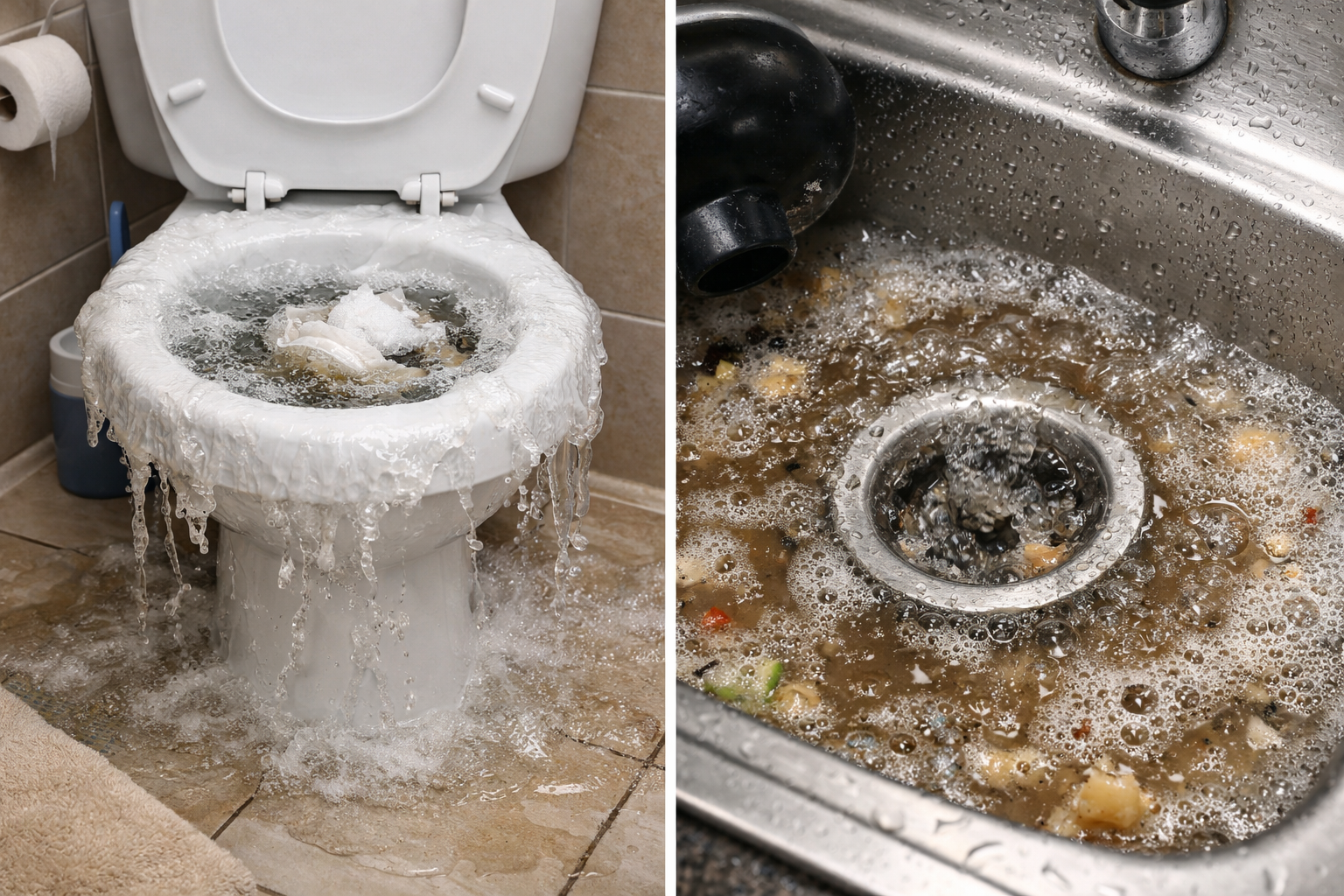
Blocked Drains vs Blocked Toilets – DIY Fixes vs When to Call a Plumber
I’ve lost count of how many panicked calls I’ve taken from homeowners who can’t tell whether they’re dealing with a blocked drain or a blocked toilet. Here’s the thing—they’re not the same problem, and treating them the same way can make a simple fix turn into an expensive disaster.
After fifteen years of snaking drains and unblocking toilets at 2 AM, I’ve learned that knowing the difference can save you time, money, and a whole lot of stress. Let me walk you through what you’re actually dealing with and when you can tackle it yourself versus when it’s time to pick up the phone.
Understanding the Difference Between Blocked Drains and Blocked Toilets
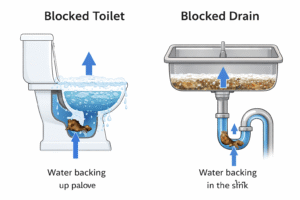
A blocked toilet is exactly what it sounds like—something’s stuck in your toilet bowl, the trap, or the waste pipe leading away from it. You’ll know pretty quickly because the water rises when you flush instead of going down.
Blocked drains are a different beast. These affect your sinks, showers, baths, or even the main sewer line that carries waste away from your entire house. Sometimes a blocked drain will cause your toilet to act up, which is where people get confused.
The easiest way to tell? If only your toilet is affected and everything else drains fine, you’ve got a toilet blockage. If multiple fixtures are backing up—say your shower gurgles when you flush the toilet, or your kitchen sink is slow—you’re likely dealing with a drain problem.
Common Causes of Blocked Toilets
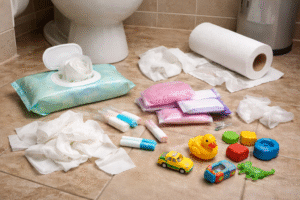
Most toilet blockages happen because someone’s flushed something they shouldn’t have. I’ve pulled out toys, phone cases, entire rolls of toilet paper, and yes, even a set of car keys. Kids are usually the culprits, but adults aren’t innocent either.
The usual suspects include:
- Too much toilet paper in one flush
- “Flushable” wipes (which absolutely aren’t flushable, despite what the package says)
- Sanitary products
- Cotton buds and cotton wool
- Paper towels
- Cat litter
Older toilets with weaker flushes are more prone to blocking. If you’ve got a low-flow toilet from the early ’90s, you might be fighting an uphill battle.
Common Causes of Blocked Drains
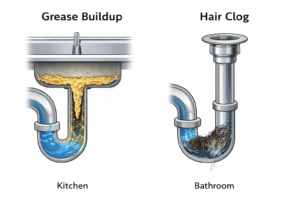
Drains block up for different reasons depending on where they are. Kitchen drains hate grease and fat. People pour cooking oil down the sink thinking hot water will wash it away, but it cools and solidifies in your pipes. Mix that with food scraps and coffee grounds, and you’ve built yourself a concrete-hard clog.
Bathroom drains collect hair, soap scum, and toothpaste. Over months and years, this builds up until water barely trickles through. Outside drains get blocked by leaves, dirt, and tree roots that crack through the pipes looking for water.
I’ve seen main sewer lines completely collapsed because tree roots had been growing inside them for years. The homeowner had no idea until every drain in the house backed up at once.
DIY Fixes for Blocked Toilets
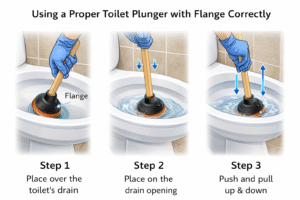
Most toilet blockages you can sort yourself with a proper plunger. Not the sink plunger with the flat bottom—you need a toilet plunger with the extended flange that seals around the toilet outlet.
Here’s the technique that actually works: push down gently first to get a seal, then pull up sharply. The pulling motion is what breaks up the blockage. Most people just push down repeatedly and wonder why nothing happens. Give it ten to fifteen good plunges. If the water level starts dropping, you’re winning.
If plunging doesn’t work, you can try a toilet auger. This is a specialised tool with a long cable that you feed into the toilet bowl to break up or hook the blockage. They cost about twenty quid and they’re worth having if you’ve got kids or an old toilet.
What you shouldn’t do is keep flushing. I’ve attended callouts where people flushed six or seven times “to try and force it through” and ended up with a flooded bathroom. One flush to check if it’s blocked, then stop.
Chemical drain cleaners are a gamble with toilets. The harsh ones can damage your toilet’s internal seals, and if they don’t work, you’ve now got a toilet full of caustic chemicals that I have to deal with.
DIY Fixes for Blocked Drains
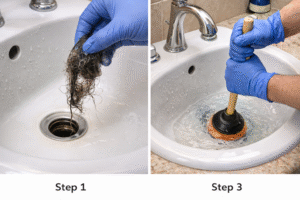
For slow kitchen or bathroom drains, start simple. Remove the drain cover and pull out any visible hair or gunk. Wear gloves—it’s disgusting but effective.
Boiling water can shift greasy buildups in metal pipes, but never use it on plastic waste pipes or you’ll melt them. A mixture of baking soda and vinegar creates a fizzing action that can break down soap scum and light blockages. Pour half a cup of baking soda down, followed by half a cup of vinegar, wait thirty minutes, then flush with hot water.
A sink plunger works well for bathroom basins and showers. Make sure there’s enough water to cover the plunger cup, block the overflow with a wet cloth, then plunge with quick, sharp movements.
For kitchen sinks with a U-bend you can access, put a bucket underneath and unscrew it. Nine times out of ten, that’s where your blockage is. Clean it out, reassemble, and you’re done.
Outside drains can sometimes be cleared by lifting the cover and removing leaves or debris. Wear thick gloves and never stick your hand down if you can’t see the bottom.
When to Call a Plumber for Toilet Blockages
If you’ve plunged for twenty minutes and used an auger without success, there’s something more serious going on. The blockage might be further down the soil pipe where you can’t reach it, or you might have a damaged pipe that’s causing repeated blockages.
Call a plumber if you notice any of these warning signs:
Water backing up into your shower or bath when you flush the toilet means the blockage is in your main waste line. This needs professional equipment to clear properly.
Gurgling sounds from other drains when you flush suggest a venting problem or a partial blockage in your soil stack. These issues require diagnostic tools and experience to fix correctly.
If your toilet keeps blocking every few days, something’s wrong with your drainage system. Could be a badly installed pipe with the wrong fall, a collapsed section, or foreign objects stuck in the line.
When to Call a Plumber for Drain Blockages
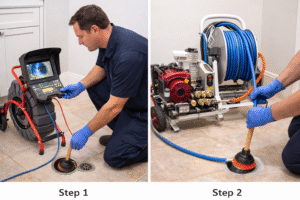
Multiple drains backing up at once always means call a professional. This indicates a blockage in your main sewer line, and DIY methods won’t touch it. We use high-pressure water jetters and CCTV drain cameras to locate and clear these blockages.
If you’ve got sewage backing up into your property, that’s an emergency. Don’t mess about trying to fix it yourself—you’re dealing with serious health hazards and potential property damage.
Persistent bad smells from drains, even after cleaning, can indicate a broken pipe or a problem with your soil vent pipe. I’ve found cracked drains under houses that had been leaking sewage into the ground for months.
Tree root intrusion needs professional equipment. You might temporarily clear the roots with an auger, but they’ll grow back within weeks unless we properly cut them and repair or reline the damaged pipe.
Prevention Tips That Actually Work
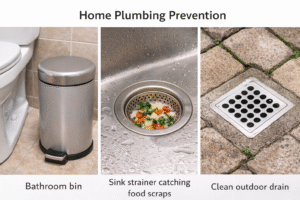
I always tell customers that preventing blockages is cheaper than fixing them. For toilets, the rule is simple: only flush the three Ps—pee, poo, and paper. Everything else goes in the bin.
Put a small bin in your bathroom and use it. Those “flushable” wipes aren’t flushable, no matter what the manufacturer claims. I’ve cleared hundreds of blockages caused by them.
For kitchen drains, wipe greasy pans with paper towel before washing them. Let the grease solidify, scrape it into the bin, then wash. Use sink strainers to catch food scraps.
Run hot water through your kitchen sink after washing up to help prevent grease buildup. Once a month, pour boiling water down to maintain clear pipes.
Keep outside drains clear of leaves, especially in autumn. A quick check once a week takes two minutes and can prevent a blocked drain emergency during heavy rain.
The Bottom Line
Most toilet blockages you can handle yourself with a decent plunger and some elbow grease. Drain blockages are trickier—simple ones respond to basic DIY methods, but anything more complicated needs a professional.
The key is knowing when to stop trying. I’ve seen people cause thousands of pounds of damage trying to fix a fifty-quid blockage. If you’re not making progress after thirty minutes of proper effort, or if you’re seeing any of the warning signs I mentioned, get a plumber out.
Trust your instincts. If something feels wrong or you’re worried about making it worse, make the call. A good plumber would rather you rang early than after you’ve accidentally cracked a pipe or flooded your bathroom trying to be a hero.