
Boiler Losing Pressure Constantly – Causes & When to Call a Heating Engineer
You’ve topped up your boiler pressure this morning, and by evening it’s dropped back into the red zone. Sound familiar? A boiler that keeps losing pressure isn’t just annoying—it’s a sign something’s wrong with your heating system. I’ve been fixing boilers for over fifteen years, and I can tell you that constantly topping up pressure is never normal. Let’s get to the bottom of what’s causing it and when you need to pick up the phone to a heating engineer.
Why Boiler Pressure Matters
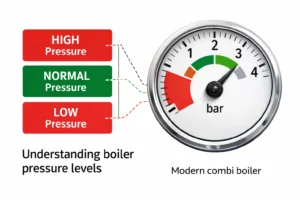
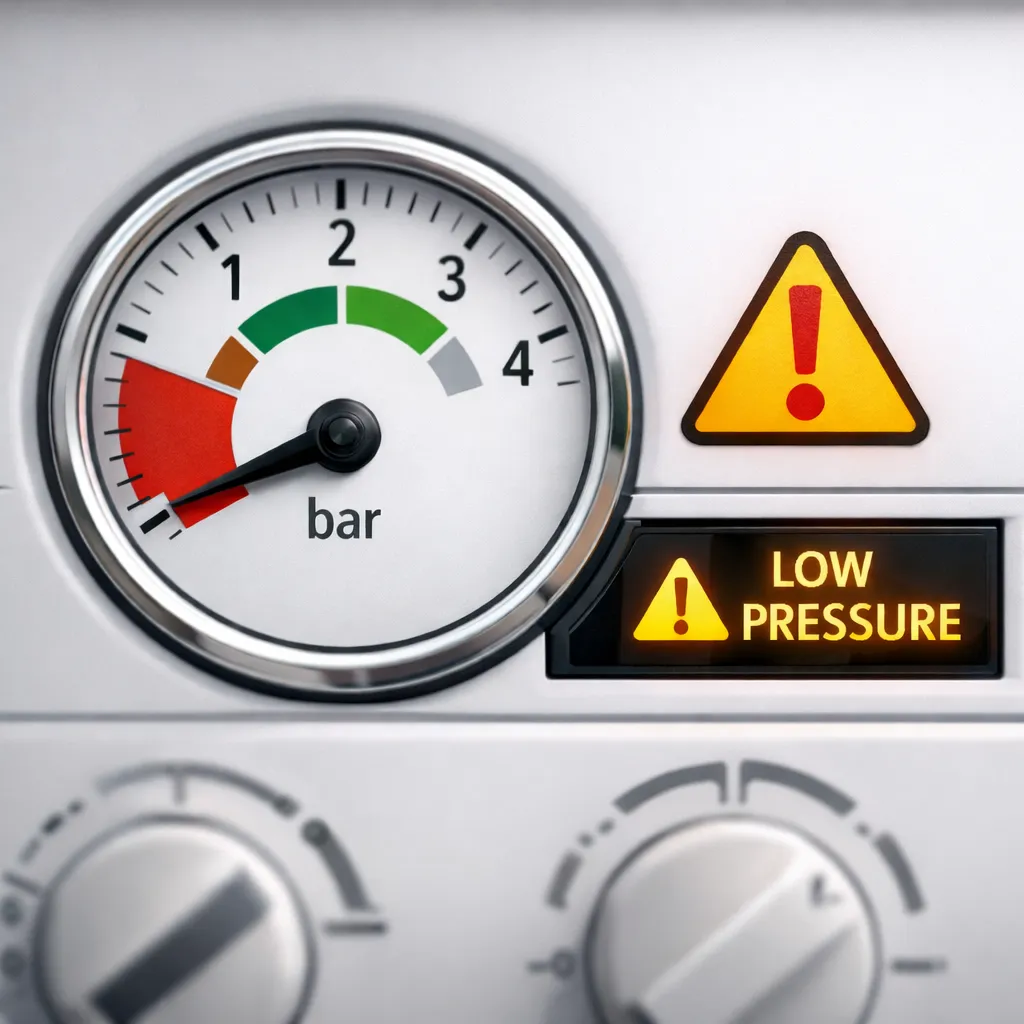
Your boiler needs the right pressure to pump hot water through your radiators and taps efficiently. Most modern boilers run best between 1.0 and 2.0 bar when the system’s cold. Drop below 0.5 bar, and your boiler might refuse to fire up altogether. That’s a built-in safety feature, not a fault—the boiler’s protecting itself from damage.
But here’s the thing: losing a tiny bit of pressure over several months is normal. Losing it weekly or even daily? That’s a leak or a component failure, and you need to sort it out before it becomes a bigger headache.
Common Causes of Pressure Loss
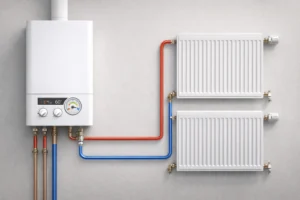
Leaking Radiator Valves
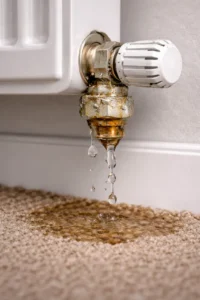
The valves at the bottom of your radiators take a battering over the years. The compression joints can work loose, or the valve spindle seals wear out. You’ll often spot a small puddle underneath or notice damp patches on the carpet nearby. Sometimes the leak’s so slow you won’t see water—just a crusty white or green deposit around the valve body.
I’ve lost count of how many jobs I’ve been to where the homeowner had no idea their radiator valve was weeping. They’d been topping up pressure for months without checking around the house properly.
Faulty Pressure Relief Valve
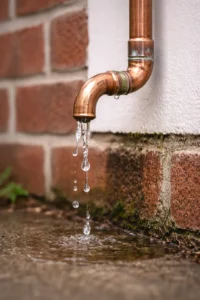
Every boiler has a pressure relief valve—it’s a safety device that opens when pressure gets too high. Problem is, sometimes these valves don’t seal properly afterwards, or they fail over time and start weeping constantly. You’ll usually find the discharge pipe outside your house (often a copper or plastic pipe near the boiler). If water’s dripping from it when the boiler’s cold, that’s your culprit.
Leaking Expansion Vessel
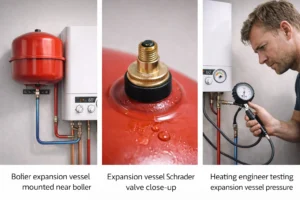
The expansion vessel is a red tank (usually) that handles the expansion and contraction of water as your system heats up and cools down. Inside, there’s a rubber diaphragm that separates air from water. When that diaphragm fails, the vessel can’t do its job properly, and you’ll lose pressure.
Testing this requires a pressure gauge on the vessel’s Schrader valve—same type you’d find on a car tyre. If there’s no air pressure or water comes out when you press the valve, the vessel needs replacing or recharging.
Automatic Air Vent Problems
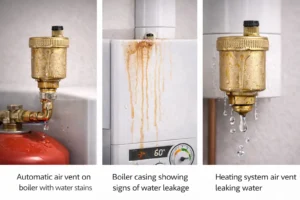
Modern boilers have automatic air vents that release trapped air from the system. When these vents stick open or their seals perish, water escapes instead of air. They’re usually located on top of the boiler or near the pump. A common giveaway is water stains on the boiler casing or the wall behind it.
Hidden Pipe Leaks
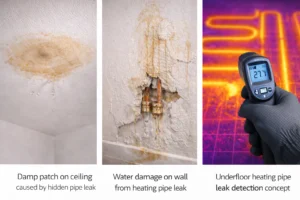
This is the nightmare scenario. Your heating pipes run under floorboards, behind plasterboard, and through walls. A pinhole leak in a joint or corroded pipe section can drip away for ages before you notice. You might see damp patches on ceilings, staining on walls, or—in really bad cases—your water bill shoots up if the leak’s on the mains-fed side.
Underfloor heating systems are particularly tricky. The pipes are buried in screed or concrete, so finding a leak means bringing in specialist detection equipment.
Blown Heat Exchanger
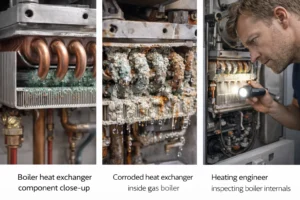
The heat exchanger is the heart of your boiler—it’s where the gas flame heats the water. Over time, especially in areas with hard water, the exchanger can corrode and develop tiny cracks. This allows water to escape into the combustion chamber or drip out of the boiler casing.
If your boiler’s over ten years old and losing pressure with no visible external leaks, a failing heat exchanger is worth investigating. Unfortunately, replacing one is expensive, often making more sense to fit a new boiler instead.
How to Track Down the Leak Yourself
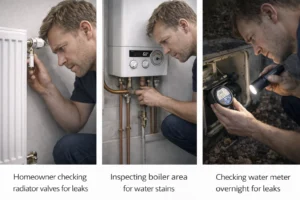
Before calling someone out, do a bit of detective work. It’ll save you money and might reveal an easy fix.
Turn your heating on and check every radiator valve while the system’s hot. Run your hand around the joints and look underneath. Check towel rails too—people always forget those.
Look at the boiler discharge pipe outside. Get down low and watch it for a few minutes with the heating on, then again when everything’s cold.
Inspect the area around your boiler for water marks, rust stains, or damp patches. Don’t forget to look up at the ceiling if your boiler’s on a ground floor.
If you’ve got a water meter, take a reading last thing at night when nobody’s using water, then check it first thing in the morning. If it’s moved and you haven’t used any water, you’ve got a leak somewhere.
When to Call a Heating Engineer
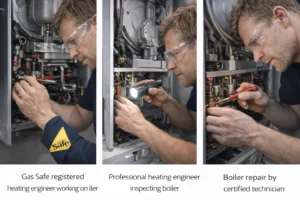
Right, let’s be clear about when this becomes a job for a professional. If you’ve found a leaking radiator valve and you’re handy with a spanner, you might tighten it or replace the olive and washer yourself. That’s about the limit for DIY on a pressurized heating system.
Everything else? Call a Gas Safe registered heating engineer. Boilers are complex, and they’re governed by strict regulations for good reason. Messing about with gas appliances when you’re not qualified is illegal and genuinely dangerous.
You definitely need a professional if:
The leak’s coming from inside the boiler casing. Only a registered engineer should open up a boiler—there are gas connections, electrical components, and safety devices that can’t be tampered with.
You can’t find any visible leak, but pressure keeps dropping. This needs proper diagnostics, possibly including pressure testing different zones of your heating system.
The pressure relief valve needs replacing. This is safety-critical and must be done correctly.
You suspect the expansion vessel or heat exchanger has failed. These repairs need the right tools and expertise.
Temporary Fixes and What Not to Do
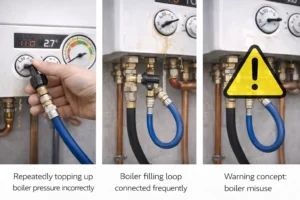
I’ve seen some creative “solutions” over the years, and most of them make things worse.
Don’t keep topping up the pressure indefinitely without finding the cause. You’re just masking a problem that’s getting worse. Plus, if you’re constantly adding fresh water to the system, you’re introducing oxygen that causes corrosion and sludge buildup.
Don’t ignore a dripping pressure relief valve. Some people notice it leaking outside and think they’ll just keep adding water. That valve’s trying to tell you something—either the pressure’s running too high or the valve itself is faulty.
Don’t seal off radiators or isolate parts of the system hoping it’ll help. I’ve been to houses where people have closed radiator valves thinking it’ll reduce pressure loss. It doesn’t work like that.
The only acceptable temporary measure is topping up the pressure when needed while you’re waiting for an engineer to visit. Just make sure you know how to do it properly—consult your boiler manual for the filling loop location and the correct pressure level.
Prevention Tips
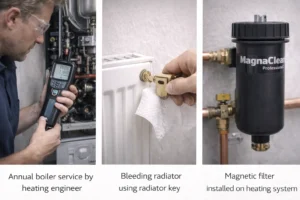
Once you’ve sorted the leak, a bit of maintenance goes a long way.
Get your boiler serviced annually by a Gas Safe engineer. They’ll spot small issues before they become expensive failures.
Bleed your radiators once or twice a year. Trapped air causes all sorts of problems and can stress components unnecessarily.
Check your boiler pressure monthly. If you notice it creeping up or down more than usual, investigate early.
Consider a magnetic system filter if you haven’t got one. It removes sludge and debris that accelerate wear on valves, pumps, and heat exchangers.
The Bottom Line
A boiler that constantly loses pressure has a leak—there’s no mystery about it. Sometimes you’ll find it yourself with a visual inspection; other times it’s hiding in the pipework or inside the boiler itself. Either way, ignoring it won’t make it better.
Check your radiators, valves, and the area around your boiler. Look for the obvious culprits first. But once you’ve done that basic investigation, get a qualified heating engineer in to diagnose and fix the problem properly. Bodging it or hoping it’ll sort itself out just wastes money on water and energy bills while risking bigger damage down the line.
Your heating system’s a closed loop—pressure shouldn’t disappear. Finding out where it’s going is the only way to fix it for good.