 Since 1998
5★ Rated
Since 1998
5★ Rated
- Emergency: 07825 348536
- Office: 01787 278511
💬
Anglian AI Assistant
✕
Hello 👋 How can we help?
Since 1998
5★ Rated
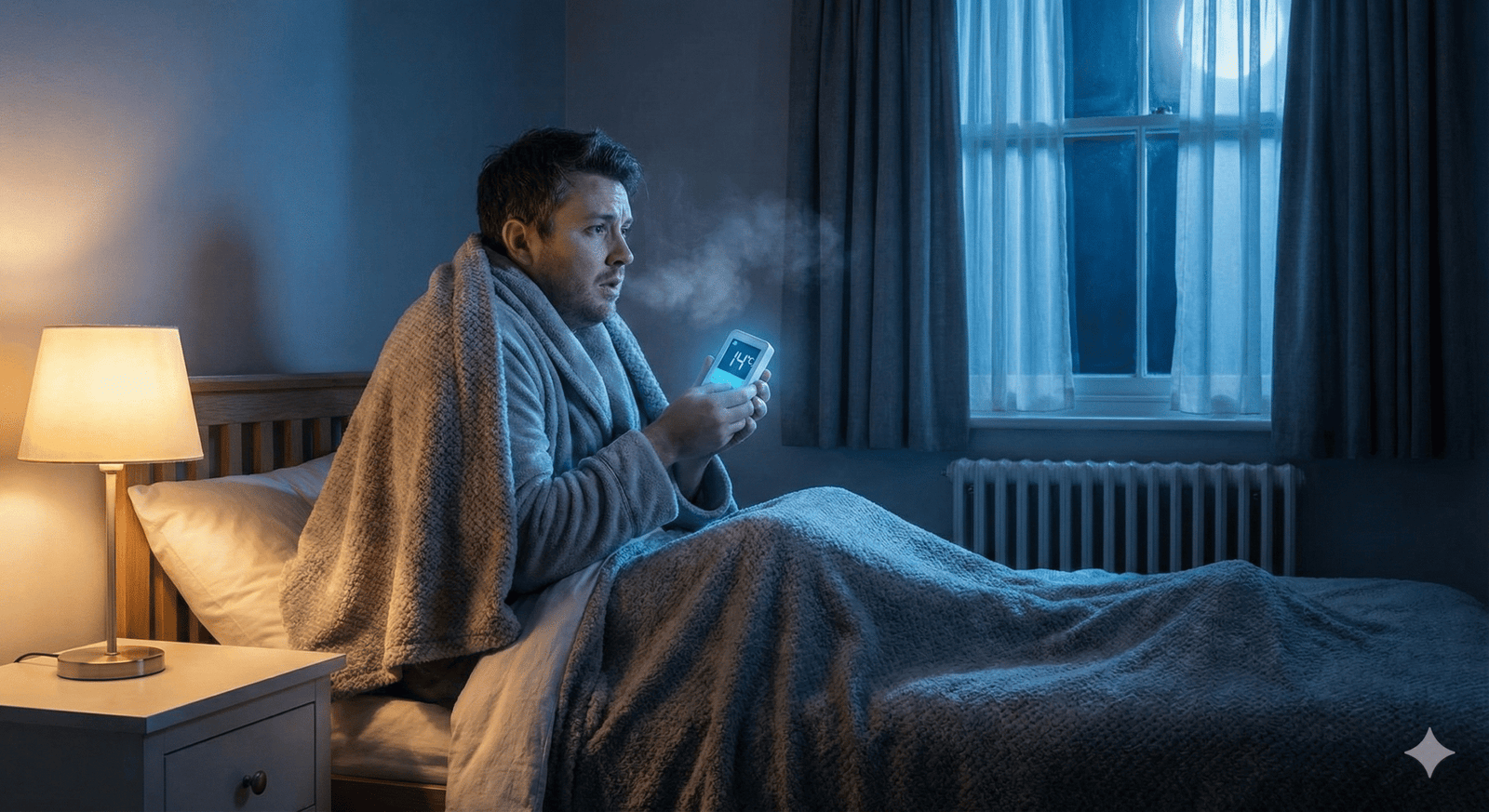
Waking up to a cold house in the middle of the night is never fun. You reach for an extra blanket, check the time, and realize your heating isn’t working. Before you panic and call an emergency plumber at 3 AM, there are several simple checks you can do yourself that might get your heating back on.
Heating problems often happen at night because that’s when your boiler works hardest to keep your home warm. The combination of colder outdoor temperatures and your system running for hours can expose issues that don’t show up during the day. Some problems are easy fixes you can handle yourself, while others need a professional right away.
In this guide, we’ll walk you through the safe checks you can do, explain what might be causing your heating to fail, and help you decide when it’s time to call an emergency heating engineer. Your safety and comfort come first, so let’s get started.
Before reaching for your phone, spend five minutes running through these basic checks. Many heating problems have simple causes that you can spot and sometimes fix yourself.
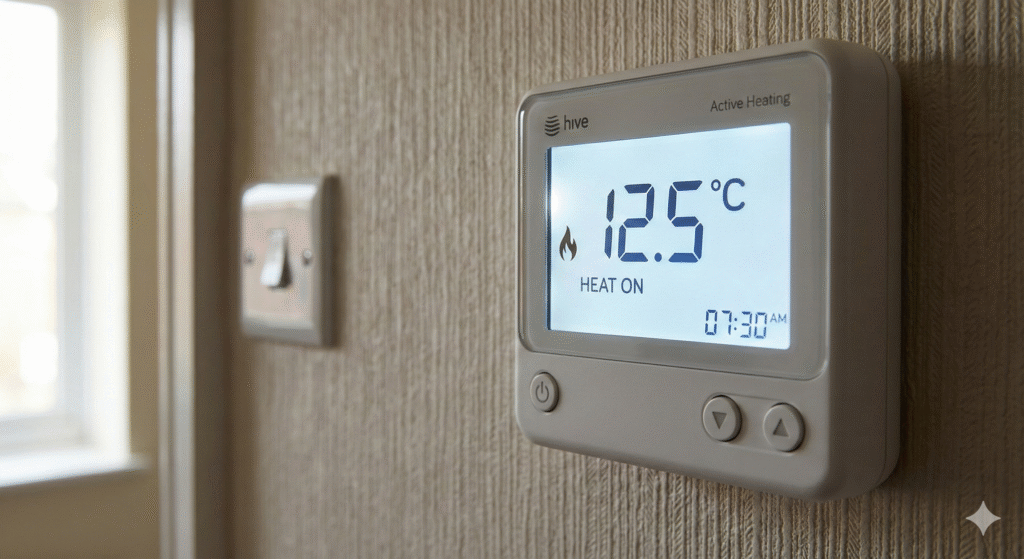
This might sound obvious, but thermostat issues cause more “no heating” calls than you’d think. Here’s what to look for:
If you have a programmable thermostat, the clock might have reset after a power cut, throwing off your heating schedule.
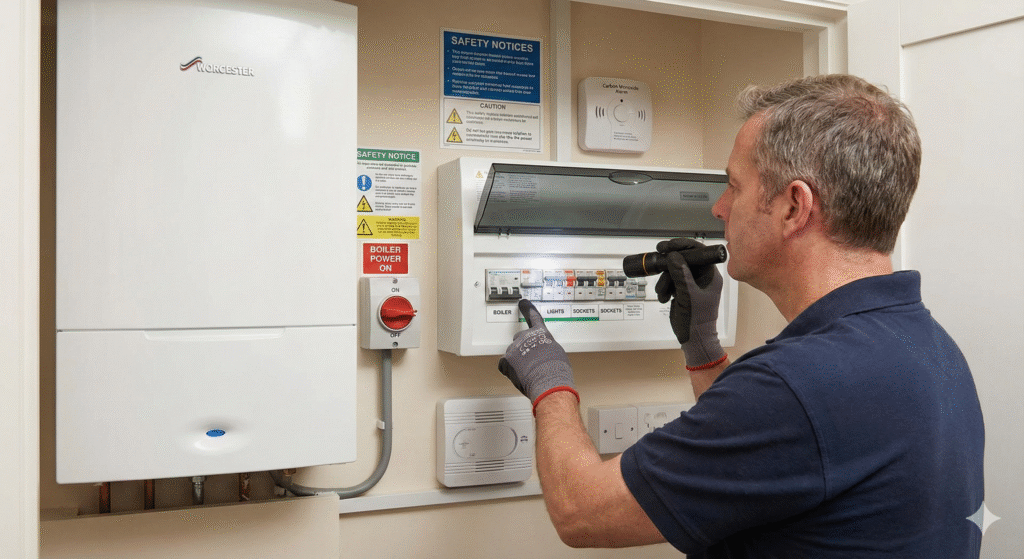
Your boiler and heating system need electricity to run, even if you have a gas boiler:
Many modern boilers have a reset button that can clear minor faults. Here’s how to do it safely:
Important: Only reset your boiler once or twice. If it doesn’t work after two attempts, stop. Repeatedly resetting your boiler when there’s a real fault can cause damage.
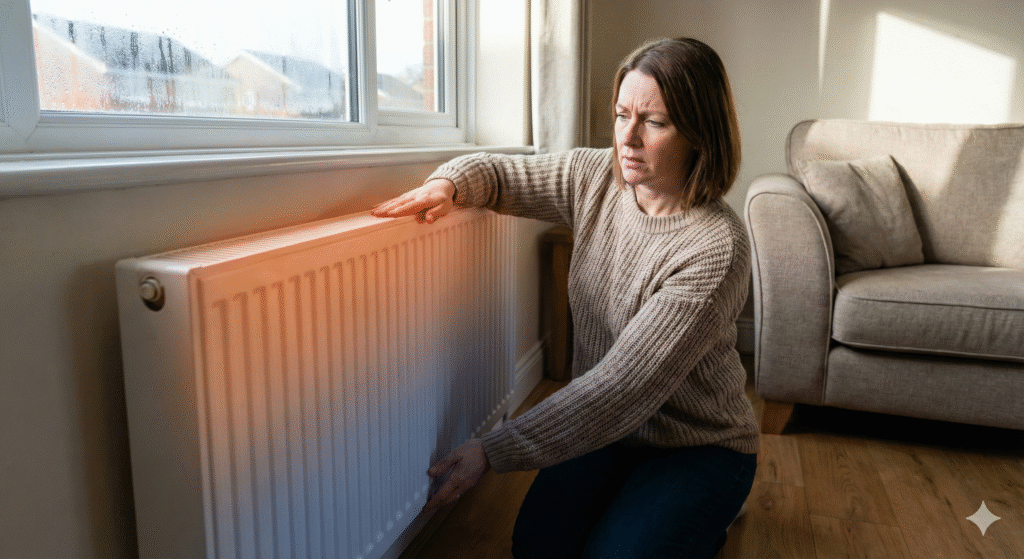
If your boiler seems to be working but your radiators stay cold:
Low pressure is one of the most common reasons for no heating. Most boilers have a pressure gauge on the front:
If your pressure is low, you might need to repressurise your system. However, if you’ve never done this before, it’s better to call a professional. Doing it wrong can cause problems.
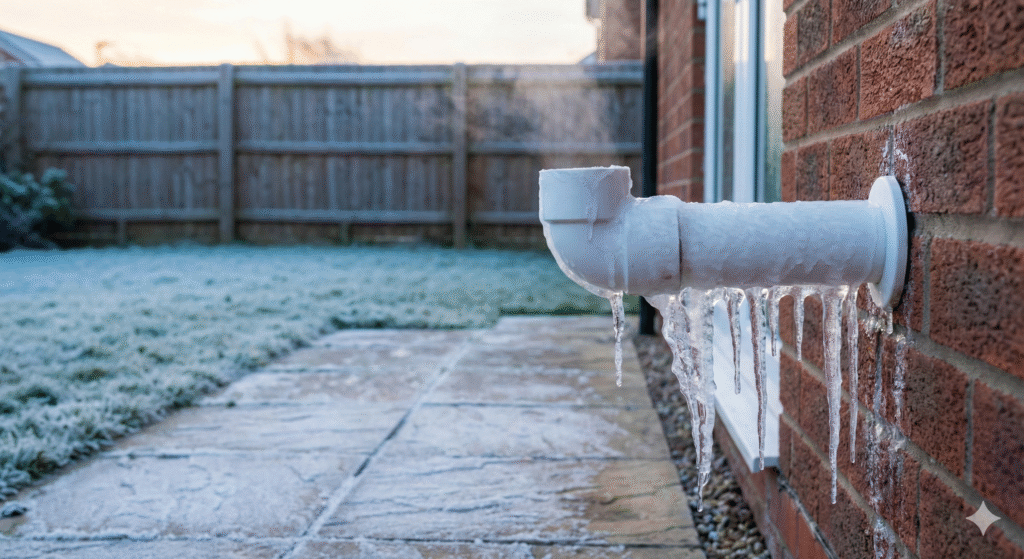
If it’s freezing outside, check your condensate pipe. This is a plastic pipe that runs from your boiler to an outside drain:
Only do this if you can safely reach the pipe. Never use boiling water or a blowtorch.
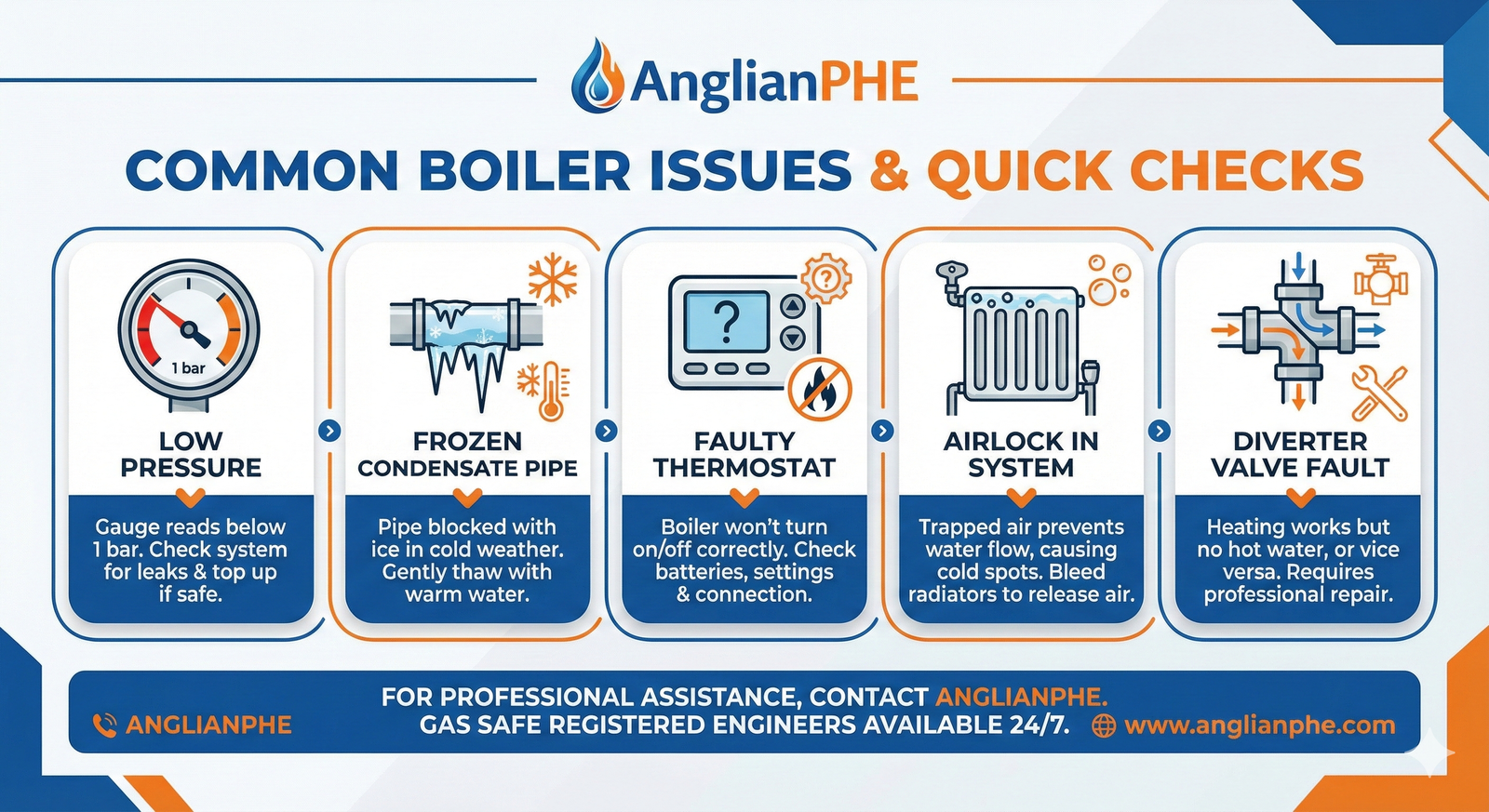
Understanding what might be wrong helps you decide whether you can fix it yourself or need professional help. Here are the most frequent culprits when heating stops working at night.
When your boiler loses pressure, it can’t pump hot water around your heating system. Pressure drops happen gradually over time as air escapes through tiny gaps, or suddenly if there’s a leak.
You’ll notice this when your boiler pressure gauge shows a reading below 1. Some boilers won’t even try to heat when pressure is too low—it’s a built-in safety feature.
Small pressure drops over months are normal. But if your pressure drops often, you might have a leak somewhere in your system that needs fixing.
Modern condensing boilers produce condensation that drains away through a plastic pipe. When temperatures drop below freezing, this pipe can ice up and block.
Your boiler detects the blockage and shuts down to protect itself. You might hear gurgling sounds or see an error code on your boiler display.
This problem happens more at night because that’s when temperatures are coldest. It’s especially common during the first cold snap of winter when pipes haven’t been insulated yet.
Thermostats eventually wear out or lose accuracy. A faulty thermostat might:
If your thermostat is old, has a yellowed screen, or behaves oddly, it might need replacing.
Your boiler runs on electricity even if it burns gas. Power problems can stop your heating in several ways:
These issues are more common than you think and are often simple to fix.
Air can get trapped in your heating pipes, creating a blockage that stops hot water flowing. You might notice:
Airlocks often happen after draining or refilling the system, but can occur naturally over time.
If you have an older boiler with a pilot light (most modern boilers don’t), the pilot might have gone out. You’ll need to relight it following the instructions on your boiler or in your manual.
Never try to relight a pilot light if you can smell gas. Leave your home immediately and call the gas emergency line.
The diverter valve tells your boiler whether to heat your radiators or your hot water. If it gets stuck:
This needs a professional to diagnose and fix properly.
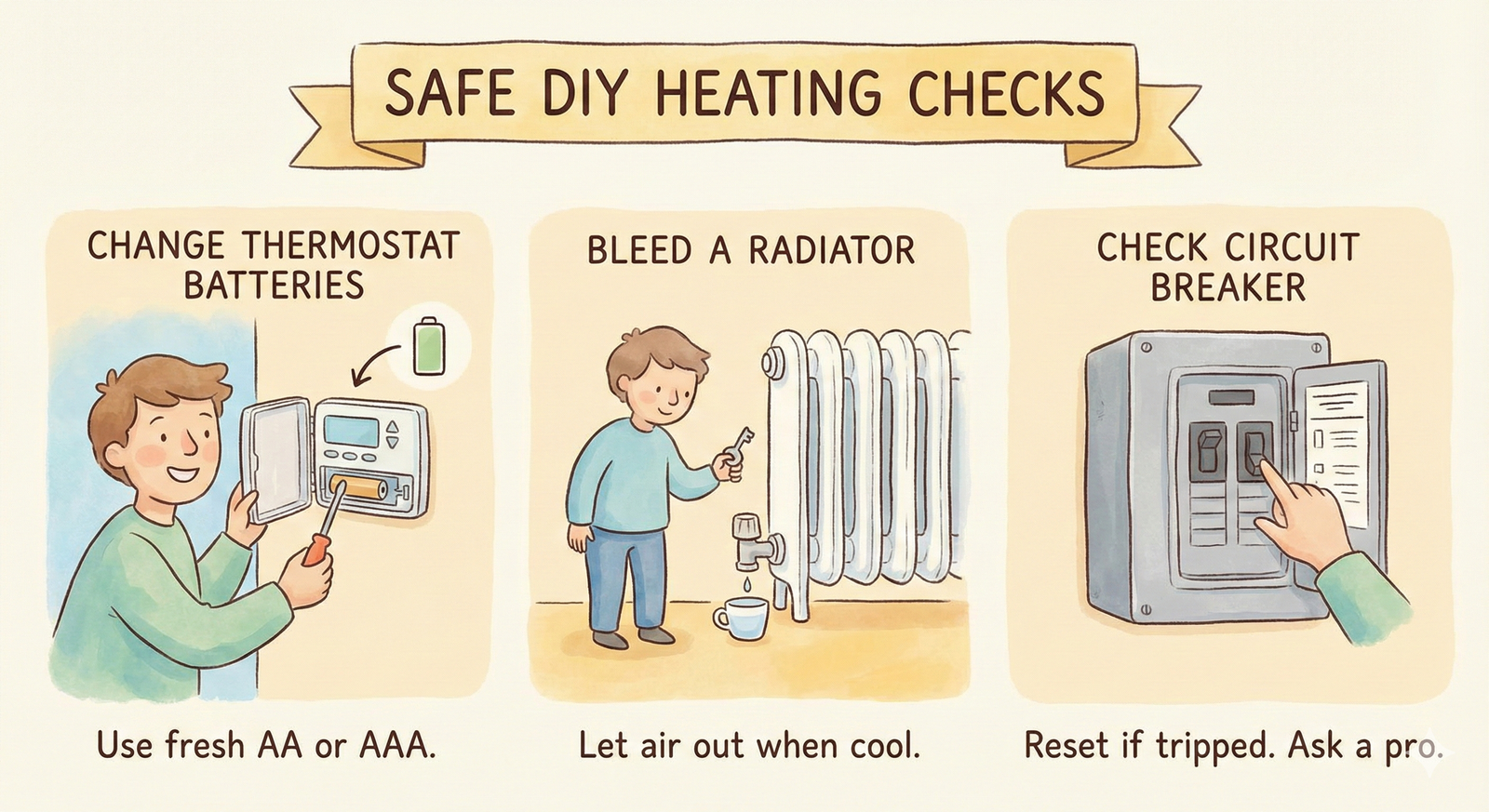
Some heating problems are safe and simple enough for homeowners to handle. Here’s what you can safely try before calling an emergency plumber.
Replacing thermostat batteries is completely safe and takes two minutes. Keep spare batteries handy during winter.
Resetting tripped breakers just involves flipping a switch back on in your fuse box. If it trips again immediately, stop and call a professional.
Adjusting your thermostat settings can’t cause damage. Play with the temperature, mode, and schedule settings to rule out programming issues.
Bleeding radiators to remove trapped air is safe if you follow instructions carefully. You’ll need a radiator key and a cloth to catch drips. Only bleed radiators when your heating is off and radiators are cool.
Thawing a frozen condensate pipe with warm water (not boiling) is safe if you can reach it easily. Wrap the pipe in towels soaked in warm water, or pour warm water over it slowly.
Even if you’re handy around the house, some heating repairs are too risky to try yourself:
Never repressurise your boiler unless you’ve been shown how by a professional. Adding too much water can damage your system.
Don’t open your boiler casing. Inside contains electrical components, gas connections, and pressurised water. Only Gas Safe registered engineers should look inside.
Never mess with gas pipes or connections. Even small gas leaks are dangerous. This is illegal work for anyone without proper qualifications.
Don’t force stuck valves or over-tighten connections. You could cause leaks or break components that cost hundreds to replace.
Avoid using your heating if you smell gas or see water leaking. These situations need immediate professional attention.
If your simple checks and safe fixes don’t work within five minutes, it’s time to call a professional. Spending hours troubleshooting in the middle of a cold night isn’t worth it. An emergency heating engineer can diagnose the problem in minutes and have you warm again quickly.
Some heating problems aren’t just inconvenient—they’re dangerous or can cause serious damage if ignored. Here’s when you need to pick up the phone right away, even in the middle of the night.
If you smell gas anywhere in your home, this is a genuine emergency:
Never assume a gas smell is minor or ignore it to avoid the hassle. Gas leaks can cause explosions and carbon monoxide poisoning.
Water pouring or dripping from your boiler or heating pipes needs immediate attention:
Turn off your water supply if you can find the stopcock. Then call an emergency plumber before water causes expensive damage.
Modern boilers display error codes when something’s wrong. While some codes mean minor issues, others indicate serious problems:
Some error codes mean your boiler has detected something dangerous and shut itself down to protect you.
No heating is bad enough, but if you also have no hot water, your boiler has completely stopped working:
In winter, going without heating overnight can cause pipes to freeze and burst, creating even bigger problems.
Some situations make no heating an emergency even if the cause seems minor:
If someone vulnerable lives in your home, don’t wait until morning to call. Get your heating fixed quickly.
Your boiler shouldn’t make loud banging, whistling, or gurgling sounds. And it definitely shouldn’t smell of anything except occasionally a faint gas smell when it first lights (which should disappear immediately).
Concerning sounds include:
Concerning smells include:
These symptoms mean something inside your boiler is failing or dangerous fumes are escaping.
When you call an emergency plumber for your heating problem, here’s what happens. Understanding the process helps you know what to expect and shows why professional help solves problems faster than continued DIY attempts.
Before the engineer leaves to visit you, they’ll ask questions to understand your problem:
These questions help them bring the right tools and parts, making your repair faster.
When they arrive, the engineer does a systematic check:
Outside your boiler, they examine pressure gauges, check for leaks, listen for unusual sounds, and verify your thermostat settings.
Inside your boiler (which only qualified engineers should access), they inspect components, test electrical connections, check gas pressure, and look for signs of wear or damage.
They might also check your radiators, pump, and other heating system parts to find the root cause.
Modern heating engineers use diagnostic tools you don’t have at home:
These tools pinpoint exactly what’s failed, rather than guessing and replacing parts randomly.
A good engineer explains what’s wrong in terms you can understand:
They should answer your questions and give you options when possible.
For many common problems, emergency engineers carry parts in their van:
They can often fix your heating the same visit. For rare or complex problems, they might need to order parts and return later. In the meantime, they’ll make sure you’re safe and, if possible, give you temporary heating.
Before they leave, the engineer runs safety tests:
They’ll also give you advice on preventing future problems and maintaining your system.
You’ll receive paperwork showing:
Keep these documents for your records and for future engineers who work on your system.
Losing your heating at night is stressful, but now you know how to handle it calmly and safely. Remember, many heating problems have simple causes you can check yourself in just a few minutes—like dead thermostat batteries or a tripped breaker.
But safety always comes first. Never take risks with gas, don’t open your boiler, and call for help when you’re unsure. Some problems might seem minor but hide dangerous faults that need professional attention.
If your simple checks don’t get your heating working again, don’t spend hours in the cold trying to figure it out. Emergency heating engineers have the tools, training, and experience to diagnose problems in minutes and get you warm quickly.
Watch for warning signs that mean you need help right away: gas smells, water leaks, persistent error codes, or unusual noises and smells from your boiler. And remember that no heating becomes an emergency when babies, elderly people, or anyone with health problems is in your home.
Regular boiler servicing prevents many of these midnight breakdowns. A yearly check catches problems before they leave you cold, keeps your boiler running efficiently, and can even extend its lifespan by years.
At AnglianPHE, we understand that heating emergencies don’t wait for business hours. Our experienced heating engineers are available 24/7 to get your heating working again quickly and safely.
Whether you’ve tried the checks in this guide and still have no heating, or you’re facing one of those “call immediately” situations, we’re here to help. Our emergency service means:
Don’t spend another cold night waiting. Contact AnglianPHE now for emergency plumbing and heating support. We’ll have a qualified engineer on their way to restore your warmth and comfort.